Symbolic Ceremonies in France | Provence Elopement Guide.
When international couples start planning a wedding or elopement in the South of France, one of the most common points of confusion is how to navigate French legal requirements. France is famous for its romantic landscapes, fine wine, and historic châteaux—but it is also known for its strict administrative bureaucracy!
Fortunately, almost every international couple who elopes in Provence chooses a symbolic ceremony. Far from feeling “fake,” a symbolic ceremony allows you to strip away bureaucratic paperwork and focus 100% on what truly matters.
What truly matters? Exchanging deeply personal vows in a breathtaking location without stress.
As an English-speaking wedding elopement photographer based in Provence, I guide couples through every step of crafting their ceremony. Whether you are following my Ultimate Guide to Eloping in Provence or reviewing sample schedules in my Provence elopement cost and timeline guide, here is everything you need to know about symbolic ceremonies and hiring local vendors in France.
1. Why Choose a Symbolic Ceremony in France?
To legally marry in France, French civil law requires that at least one partner reside continuously in the municipality (commune) where the marriage will take place for a minimum of 30 days prior to the wedding date.
Furthermore, extensive documentation must be translated into French by a certified translator, published publicly at the local town hall (Mairie) for 10 days, and finalized during an official civil service conducted strictly in French.
Choosing a symbolic ceremony circumvents all of these hurdles.
The Benefits of a Symbolic Elopement:
- Zero Bureaucracy: No residency requirements, translation fees, or town hall appointments in France.
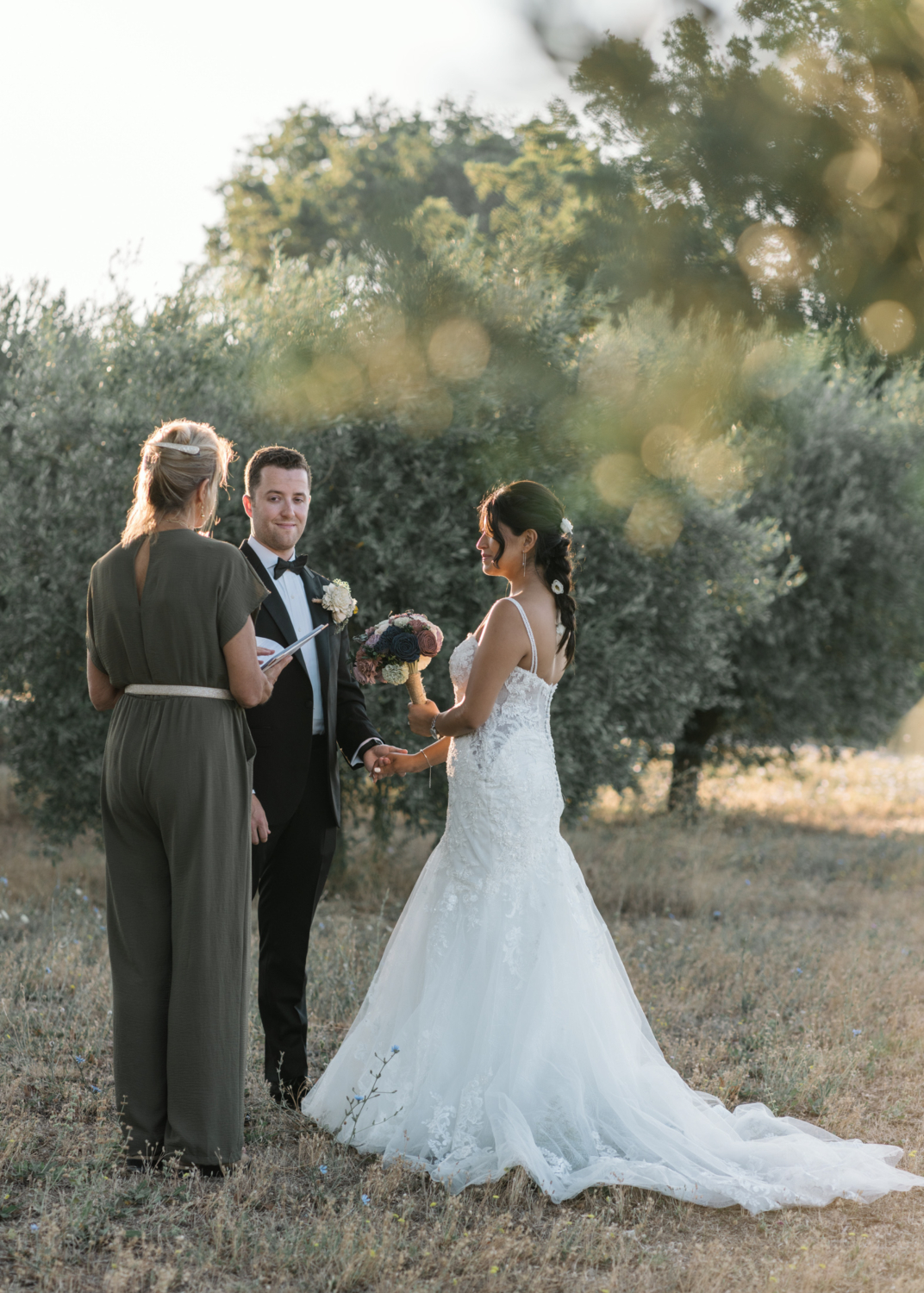
- Complete Location Freedom: You can exchange vows anywhere—in a blooming lavender field, atop a cliffside ruin in the Luberon, or in the private garden of a historic bastide.
- Personalized & Meaningful: You control every word, song, and moment without legal scripts or rigid traditions.
2. How to Handle the Legal Paperwork at Home
The easiest and most popular approach for destination couples is to handle the administrative paperwork at your local courthouse or town hall back home.
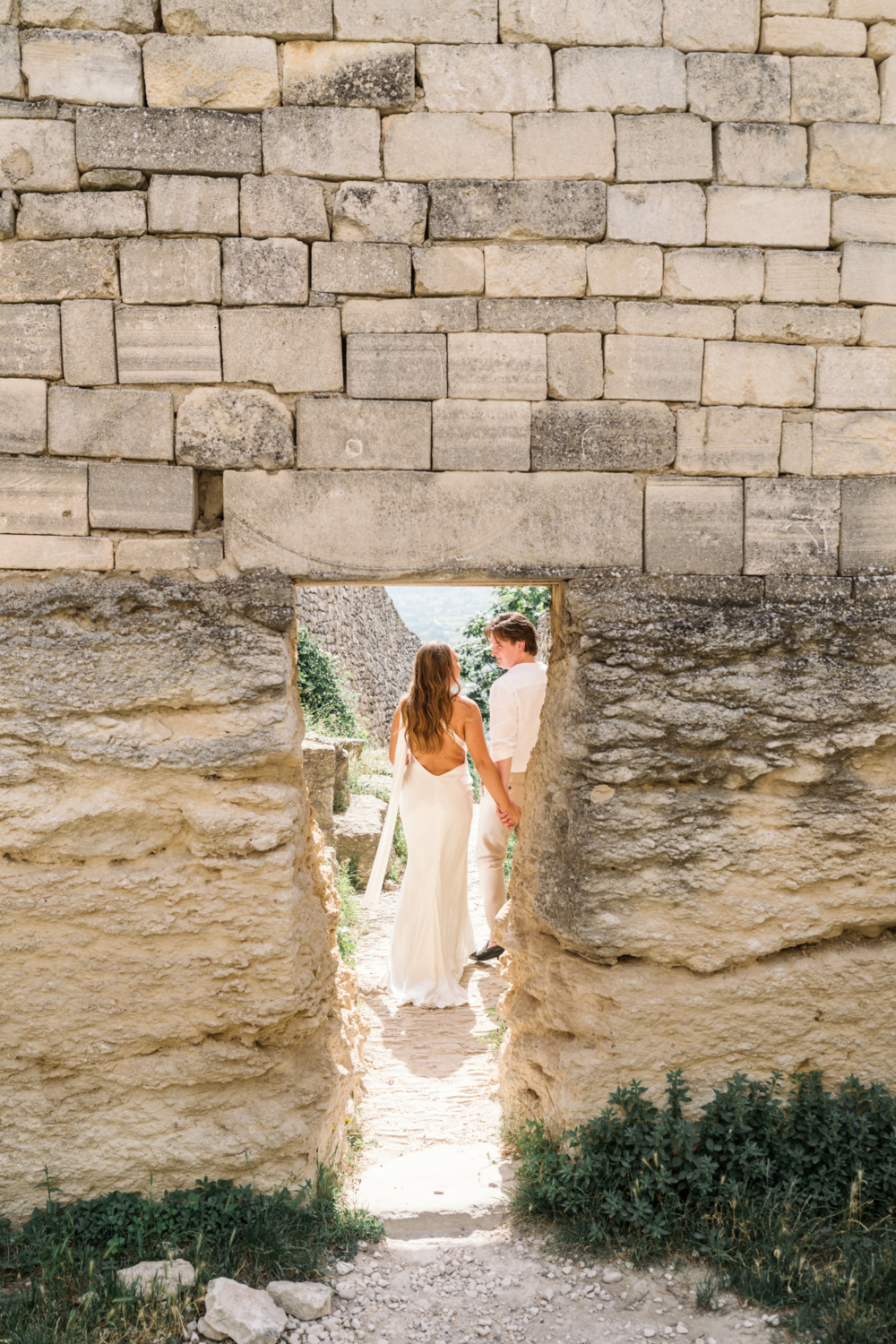
Many couples choose to sign their marriage license quietly at home, saving their actual exchange of wedding rings, personal vows, and emotional celebration for their elopement day in Provence. That way, your anniversary remains the date you exchanged your vows under the Provençal sun!
3. What Does a Symbolic Elopement Ceremony Look Like?
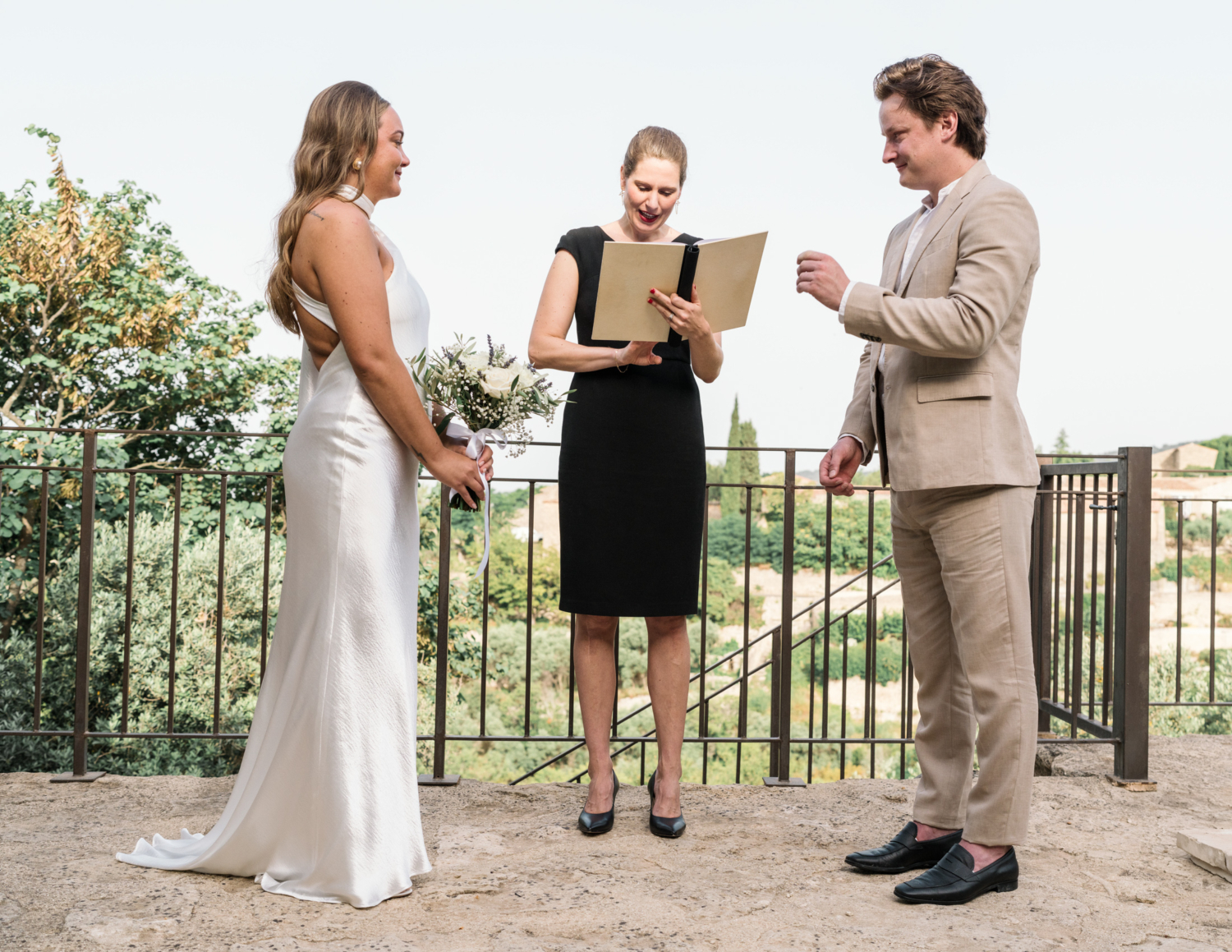
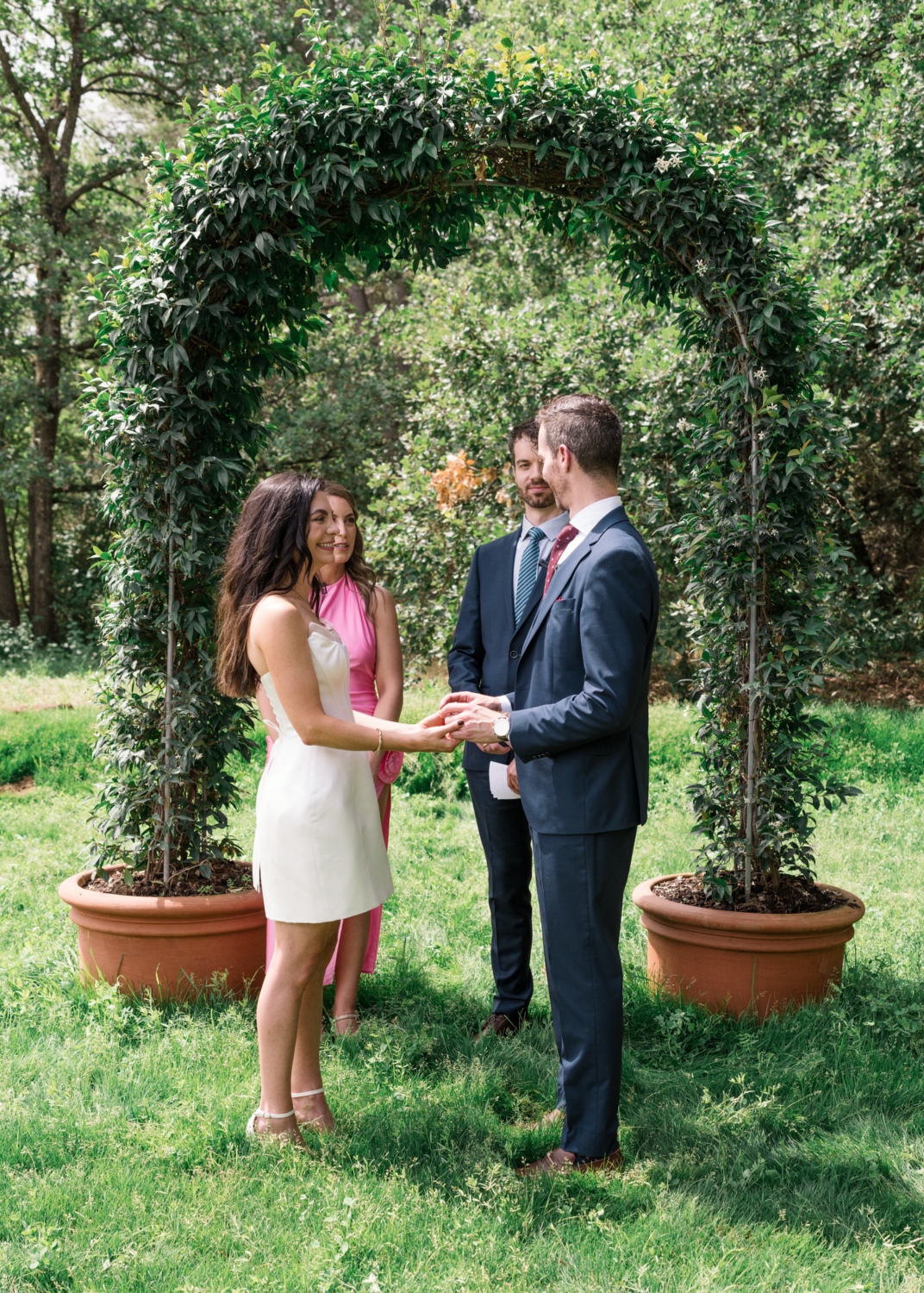
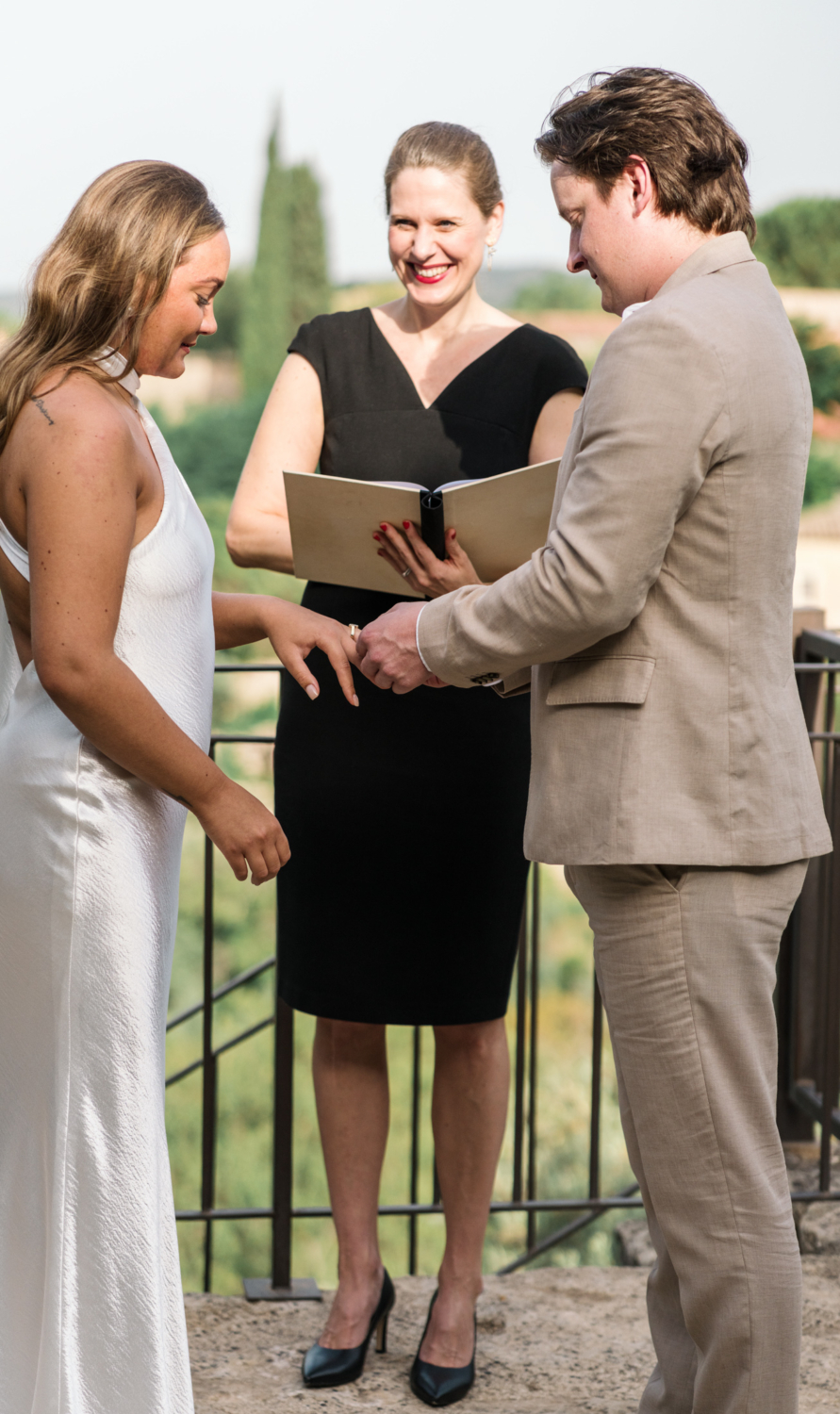
A symbolic ceremony is completely custom-tailored to you. Depending on your preference, it can be officiated by a professional bilingual celebrant, led by a close friend or family member, or kept entirely private between just the two of you.
Option A: Professional English-Speaking Celebrant
A professional celebrant crafts a personalized ceremony narrative. They learn about your love story prior to your trip, guide you through writing your vows, and lead the ceremony with warmth and structure. As an elopement photographer in France, I love working with celebrants and officiants, who really spend a lot of time developing and creating a beautiful, heartfelt ceremony tailored to the couple.
Option B: Self-Guided / Private Vow Exchange
For couples seeking ultimate intimacy, you don’t need an officiant at all! You can hold hands in a quiet lavender field at sunrise, read your written love letters or vows to each other, and exchange rings in total peace. Most of my clients prefer a very quiet, private vow exchange.
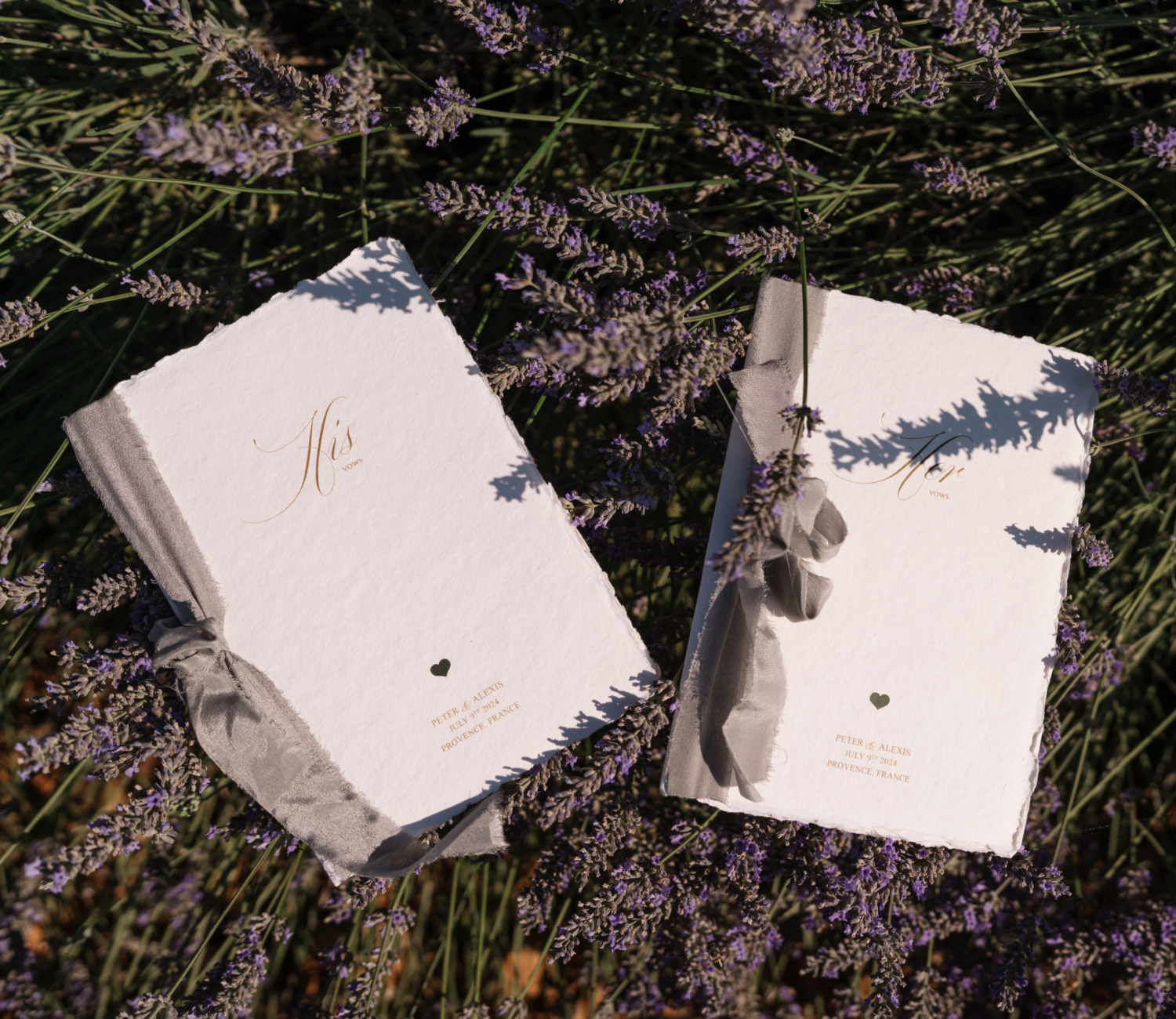
4. Meaningful Rituals to Include in Your Vow Exchange
Since a symbolic ceremony has no legal constraints, you can incorporate unique cultural or personal traditions to make the moment feel extra special:
- Wine Box or Love Letter Ceremony: Seal a bottle of local Provençal wine (like a rich Châteauneuf-du-Pape or Bandol) along with handwritten love letters in a wooden box, to be opened on your 5th or 10th anniversary.
- Handfasting / Ribbon Tying: An ancient Celtic ritual where cords or ribbons are tied around your hands to symbolize joining your lives together (“tying the knot”).
- Acoustic Music Serenade: Hire a local violinist or acoustic guitarist to play your favorite song as you walk up to your vow spot or toast with champagne immediately after.
5. Hiring English-Speaking Vendors in Provence
Building a supportive team of local vendors makes your elopement seamless and stress-free. In Provence, there is a vibrant network of talented, English-speaking wedding professionals who specialize in working with international couples.
Key Vendors You May Need:
- Elopement Photographer: Acts as your visual storyteller and local guide (helping with timing, scouting crowd-free spots, and managing logistics). I’d love to capture your incredible day!
- Officiant / Celebrant: Writes and conducts your personalized ceremony.
- Florist: Creates custom bridal bouquets and boutonnieres using seasonal Provençal flowers, olive branches, and lavender.
- Hair & Makeup Artist: Comes directly to your accommodation on the morning of your elopement to ensure you feel comfortable and radiant.
- Private Chef / Fine Dining: Prepares a multi-course celebratory meal paired with local wines at your private villa or bastide.
Ready to Plan Your Symbolic Ceremony in Provence?
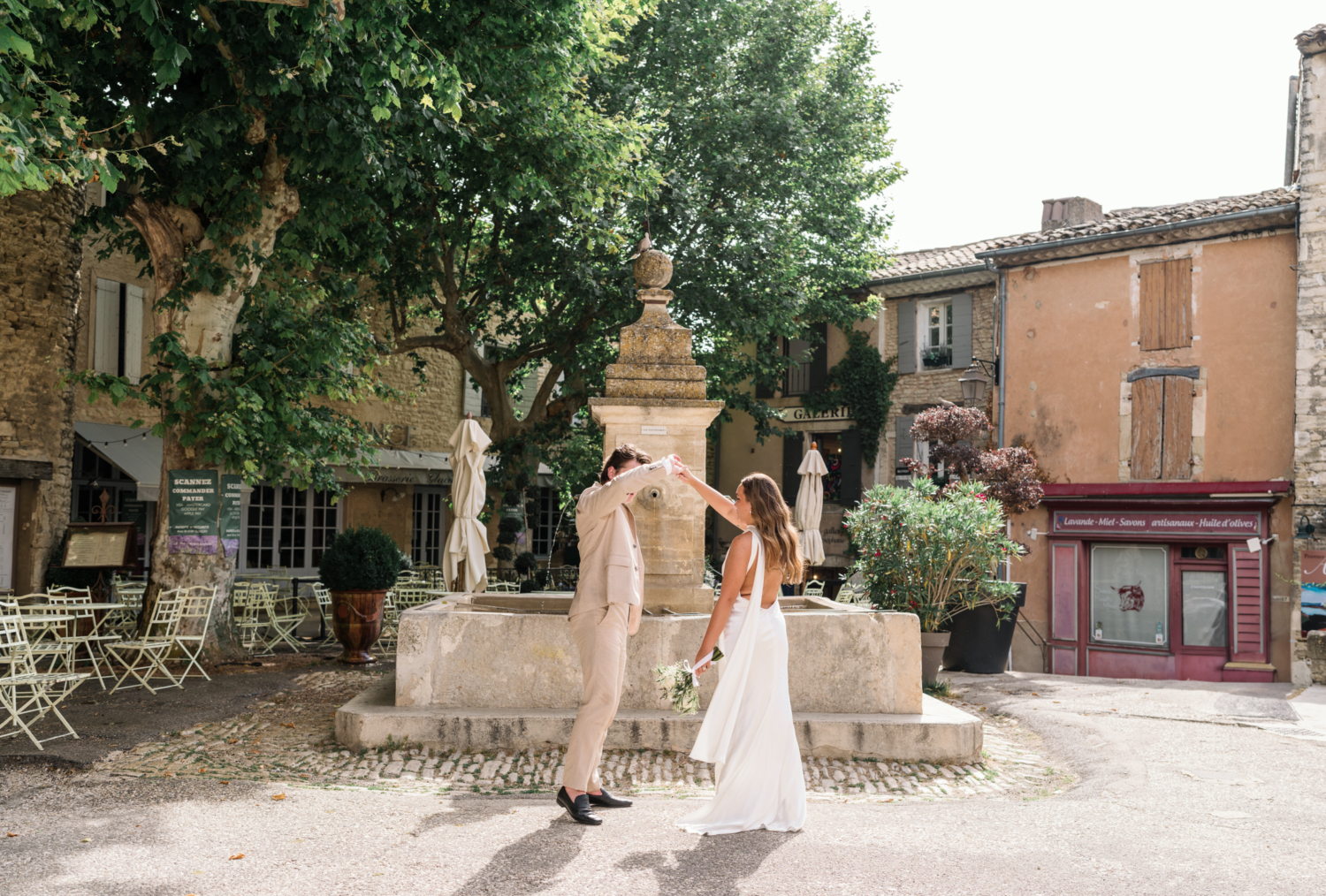
A symbolic elopement in France gives you the ultimate gift: a wedding day that feels completely authentic, deeply romantic, and entirely free from stress.
To start bringing your vision together—from exploring venue options to choosing what to wear—be sure to dive into my master resource: The Ultimate Guide to Eloping in Provence.
[Contact Me Today to Start Planning Your Provence Elopement]